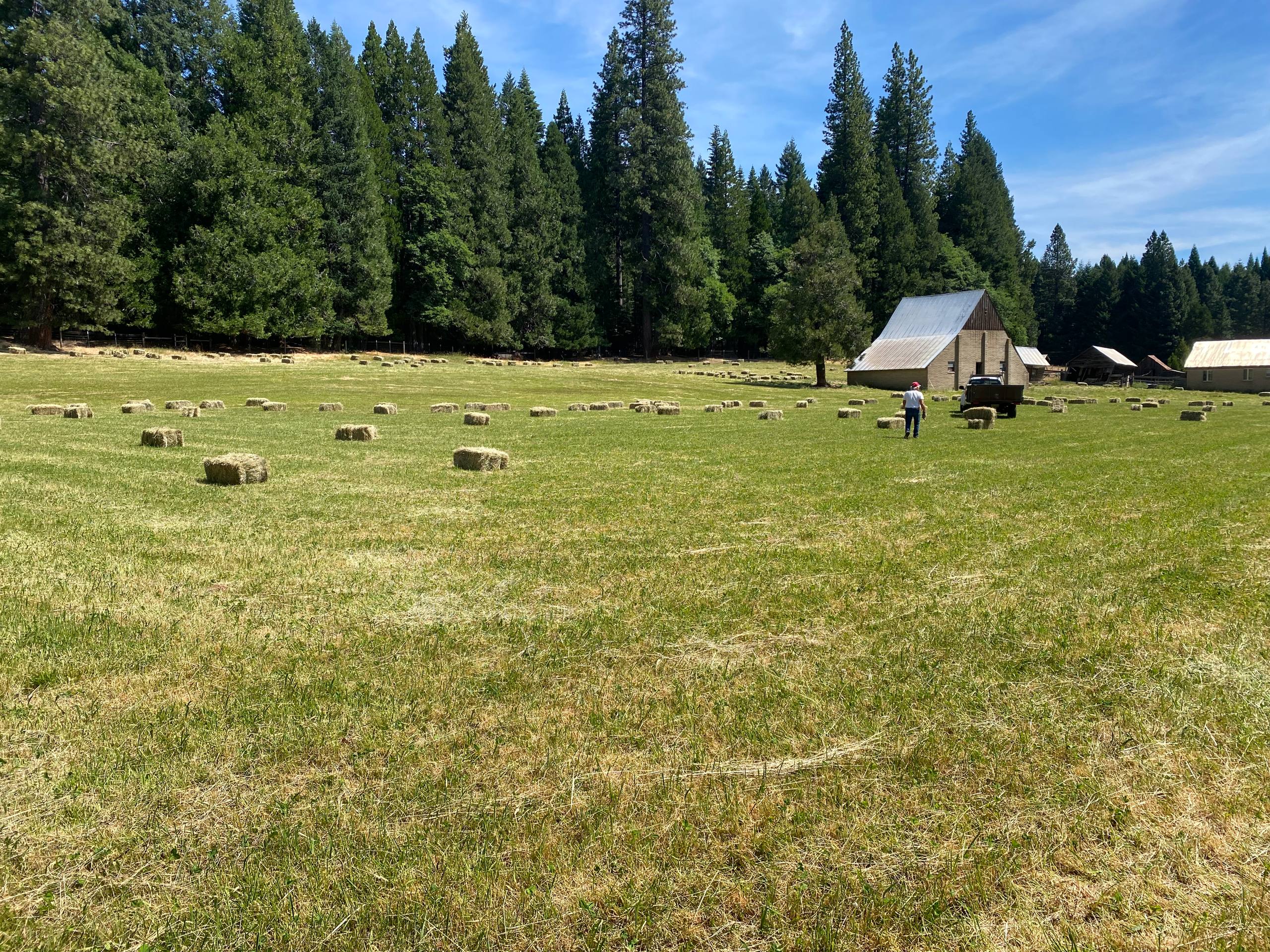
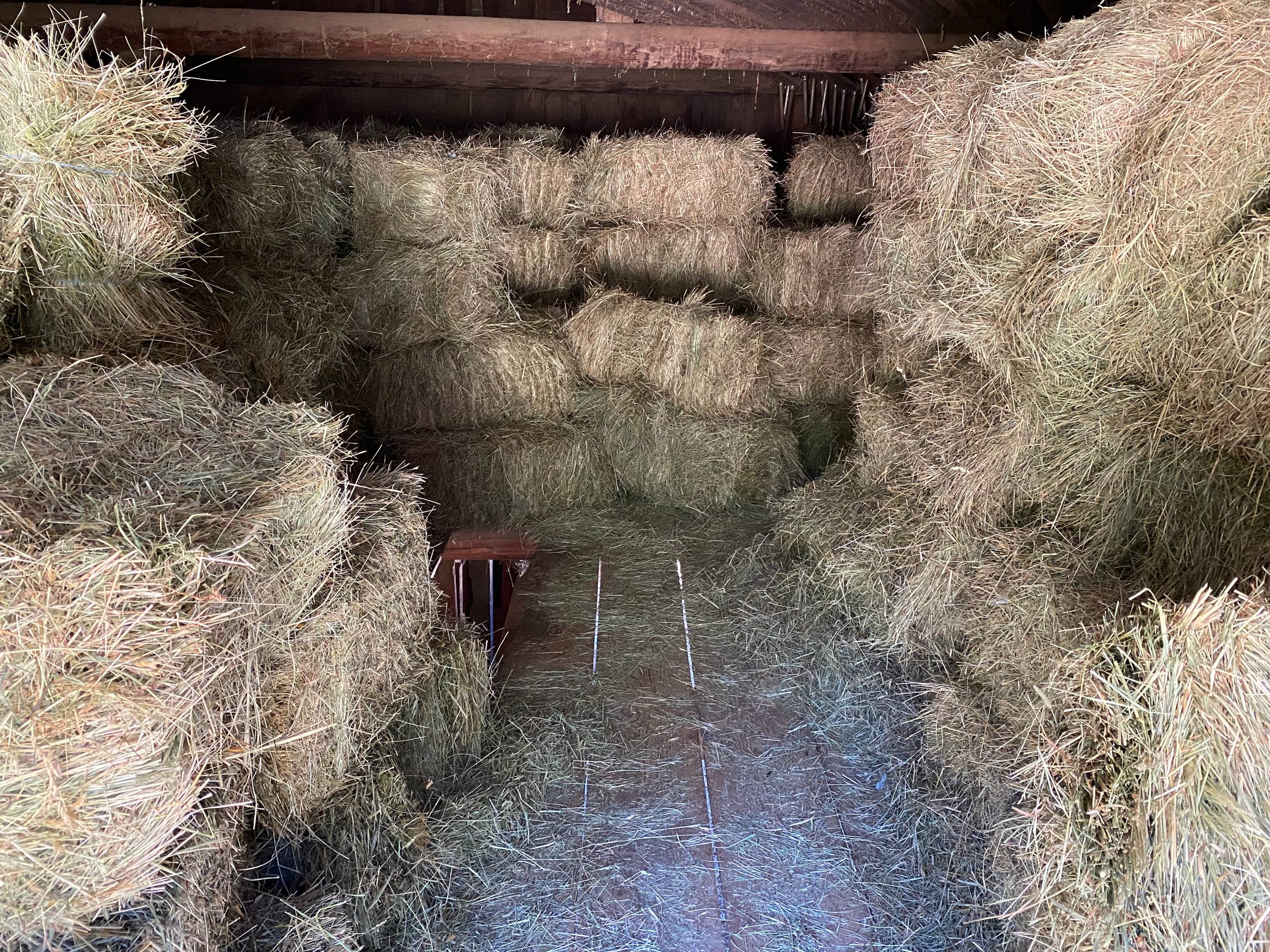
Yes, we stack hay. It is one of the most common hourly labor calls we get once the fields come off in summer, and it is exactly the kind of work a local crew should handle for you. Today, at the time of writing this, we bucked and stacked 285 small-medium sized bales in Meadow Valley, moved them out of the field and stacked them in the barn. This post walks through what hay stacking actually involves, what it costs to think about, and why most folks are better off making a call than doing it solo.
What hay stacking actually means
Hay stacking is two jobs that usually run together. First is bucking, which is picking the bales up off the field and loading them, often onto a truck or trailer. Second is stacking, which is building those bales into a stable, tight stack inside a barn or under cover. Both are hot, heavy, time-sensitive work. A small square bale runs 40 to 70 pounds, and you are lifting and placing every single one of them, sometimes hundreds in a day.
We handle the whole chain so you do not have to:
- Loading bales straight off the field
- Hauling from field to barn or storage
- Stacking tight and square so the pile holds
- Cleaning up loose hay and old spoiled bales when we are done
We work small, medium, and large bales. The big rounds and large squares need equipment to move, and we will tell you straight whether a job is a hand-stack or needs a machine before we start.
Why stacking it right matters
A hay stack is not just a pile. Stack it wrong and you lose hay to spoilage, or worse, the stack shifts and comes down. A good stack does a few things at once. It keeps air moving so the bales do not trap moisture and mold. It stays square and locked so it does not lean or topple as it settles. And it uses the space you have, because barn room is never as big as the hay crop.
Timing is everything with hay
Hay does not wait for your schedule. Once it is cut and baled, you want it off the field and under cover before weather or dew gets to it. A summer thunderstorm can undo a good cutting fast. That is the single biggest reason people call us for this: they need it moved now, and they need enough hands to get it done in one go instead of dragging it out over a weekend.
We turn quotes around fast, usually same day, so when your hay is ready you are not waiting on us. If you know your cutting is coming up, give us a heads up and we will schedule you in.
Why hire a crew instead of doing it yourself
Plenty of folks in Quincy have stacked their own hay for years, and there is nothing wrong with that. But it is brutal work, and a few things make a crew worth the money:
- Your back. Hundreds of bale-lifts in the heat is how people get hurt. We do this work all season, and we bring the hands to split the load.
- Speed. A crew clears a field in a fraction of the time, which matters when weather is moving in.
- A stack that lasts. We build it tight the first time so you are not restacking a leaning pile in October.
- Cleanup included. Loose hay, broken bales, and old spoiled stock from last year can go too. If you have a barn full of junk crowding the space, our junk removal crew can clear it before the new hay comes in.
Hay stacking is heavy, hands-on hourly work for us - the kind of job that just needs bodies and a good work ethic. If it is seasonal and physical, we probably do it.
What it costs
Hay stacking is priced by the size of the job, not a flat rate, because no two are the same. The things that move the number are how many bales, bale size and weight, how far they have to travel from field to barn, the stacking height, and access. A few hundred small squares stacked in an easy-access barn is a different job than large bales hauled up a rough field road. The honest answer is we give you a real number once we know the bale count and where it all has to go, and we do not pad it.
If you are weighing this against other summer property work, it often makes sense to bundle. Crews that are already on site for hay can knock out lawn mowing, brush, or a cleanup in the same trip, which saves you a second call.
We cover the whole valley
We stack hay across our full service area, including Quincy, Meadow Valley, Greenhorn, Spring Garden, Cromberg, and the surrounding Plumas County properties. If you run a few horses, a small herd, or you just put up hay for the winter, we are the local crew that shows up on time and does it right.
Got hay coming off the field? Call 530-552-7006.